Anúncios
The way a title hooks players often blends technology, psychology, and social design. Since Claudia Bielsa first played on a Game Cube in 2002, the industry has changed dramatically. Developers now craft loops that keep players returning for months or years.
Modern hardware — from the BenQ X3100i projector to VR headsets — raises immersion to new levels. Titles like Half-Life: Alyx set a benchmark for virtual reality, while large-screen experiences such as EA Sports College Football 25 mimic stadium intensity on a 150-inch display.
Social mechanics also matter. Games like Pokémon GO fuse AR and the real world to create shared moments among friends. The most compelling videojuegos balance technical performance with emotional weight, so every session feels meaningful and worth the time.
Defining the Modern Gaming Experience
Today’s games fuse cinematic storytelling with real-time graphics to create truly living worlds. In the primera instancia, this blend sets the tone: high visual fidelity and layered narratives work together to form memorable videojuegos.
Claudia Bielsa recalls how The Legend of Zelda: Ocarina of Time in 2002 shaped her path into interactive media. That early encounter shows how single moments can steer a lifelong passion and influence later decisiones over años.
Modern videojuegos ask players to do more than play. They invite participation in persistent spaces that evolve with community input. Developers now rely on advanced engines to meet the expectations of gamers who expect seamless worlds.
“A true modern experience blends visual craft with systems that respond to the player.”
- Rich storytelling that adapts to choices.
- Technical polish that raises immersion.
- Community-driven worlds that change over time.
These elements make videojuegos into ongoing experiencias rather than isolated sessions. The result is a coherent environment where each gamer feels part of a larger story.
The Psychology Behind Addictive Mechanics
Addictive game systems tap into basic reward chemistry to make play feel instantly compelling. Designers study how small wins affect attention and mood. They shape feedback so players notice every step forward.
Dopamine loops
Dopamine loops form when a title rewards action with immediate signals. Titles such as Ragnarok Online use item drops and level-ups to trigger those hits.
“Timely rewards make each action feel meaningful and worth repeating.”
Progression systems
Progress systems guide players through clear goals. Over years, character growth becomes a core motivator.
- Long-term goals: Persistent advancement keeps jugadores returning across años.
- Constant feedback: Small rewards signal progress and sustain engagement.
- Balanced pacing: Designers tune difficulty and reward to avoid burnout.
The result is a type of control that feels both satisfying and natural. In this way, videojuegos and games create deep, lasting experiencias within a virtual world.
Enhancing the Experiencia Gamer Through Immersive Technology
Projectors now play a central role in how people enjoy videojuegos at home. They offer a shared, social format that keeps players and jugadores together during long sessions.
The role of projectors
Devices like the BenQ X3100i deliver 4K resolution, low input lag, and high refresh rates. That combo preserves competitive performance while scaling up the visual field.
- Large screens expand the field of view, making games feel more cinematic and inclusive.
- Projectors avoid isolation common with VR, so friends and family share the same momento.
- Quality projection surfaces turn any wall into a stage for environmental storytelling.
- Reduced input lag ensures that high-level play and fast-paced juego remain responsive.
“Big-screen projection proves that scale and performance can coexist in modern setups.”
The result is a flexible, social platform for games that supports deep experiencias across años of play. Players get cinematic visuals without sacrificing the precision they need to compete.
The Role of Visual Fidelity and Soundscapes
A game’s visuals and audio act like twin storytellers, shaping mood and guiding attention to small, meaningful details. Together they raise the experiencia gamer by making each scene feel alive.
Titles such as Dragon Age Inquisition and Guild Wars 2 show how dynamic soundscapes add depth. High-fidelity audio helps players locate threats and notice environmental cues during intense moments.
Developers invest in realistic lighting and detailed textures so every environment reads as believable. That attention to craft makes a videojuegos world distinct and memorable at every nivel.
“Sound and sight combine to keep players returning to the same virtual spaces for años.”
The right soundtrack plus ambient noise creates an emotional bridge between player and world. These layered experiencias turn a simple juego session into a lasting memory.
- Audio cues: Improve situational awareness in fast-paced scenes.
- Lighting: Sets tone and guides exploration.
- Real-time engines: Enable complex, believable scenes across modern games.
Social Dynamics and Community Engagement
Online groups give a videojuego its living culture and steady momentum. Communities turn routine matches into rituals and help titles grow beyond release week.
Multiplayer connectivity
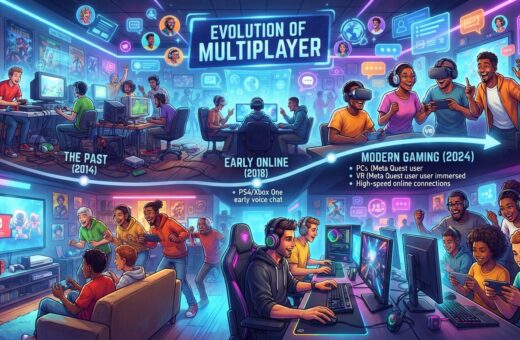
Multiplayer connectivity makes it easy for jugadores to meet across regions and time zones. Teams form, friendships last for años, and competitive scenes emerge around a single juego.
The Super Smash Bros España community shows how regional hubs can support tournaments, coaching, and regular meetups. That structure helps players reach a higher nivel and keeps interest focused on the genre and the game.
Forum culture
Forums and message boards remain vital. Players share strategies, report bugs, and co-author guides that lift an entire class of players.
- Knowledge-sharing strengthens tactics and community trust.
- Peer moderation often reduces toxic behavior over time.
- Collaborative projects and events turn a hobby into real social vida.
For further study on social mechanics and collective behavior, see community-driven research. These networks shape how videojuegos deliver enduring experiencias.
Personalization and the Power of Avatars
Avatars let players shape how they show up inside a videojuego world.
Personalization allows someone like Claudia Bielsa to pick bold colors such as pink, green, and red. These choices create a visible signature that stands out in crowds and matches her play style.
Choosing a clase and visual style gives players a sense of ownership. When players craft a look, the character becomes a private statement about identity within the juego.
Avatars also link the player to narrative choices. A customized character changes how a story reads and how challenges feel. That personal tie makes long-term experiencias more meaningful across años of play.
“Seeing other players’ avatars reveals community taste and sparks conversation.”
- Custom options let jugadores experiment beyond real-world limits.
- Social visibility promotes collaboration and friendly rivalry.
- Deep customization often raises retention for developers.
In short, well-designed avatar systems make videojuegos more personal, social, and sticky for players of any género or tipo.
Emotional Resonance in Narrative Design
Narrative design can make players carry a story with them long after they stop playing. Strong scripts and tight pacing turn mechanical goals into emotional moments.
Narrative empathy
Narrative empathy appears when a videojuego lets players feel a character’s triumphs and losses as if they were their own. Titles from Square Enix, like Final Fantasy and Nier: Automata, use character-driven arcs to create those bonds.
For a woman in the industry such as Claudia Bielsa, these emotional journeys fuel long-term pasión for the medium. Stepping into a protagonist’s shoes becomes a kind of guided escapism that helps people process stress and questions from real life.
“Music and cinematic direction are the majority factors that ensure players follow the story’s emotional arc.”
Designers separate virtual feeling from reality so players can explore complex temas without losing personal balance. That separation gives a videojuego the possibility to offer safe reflection and renewed perspectiva.
- Immersive music: amplifies sadness, joy, and tension.
- Visual cues: guide empathy and clarify stakes.
- Player control: choices deepen attachment and make experiencias feel earned.
The Impact of Competitive Gaming Environments
Tournaments and ranked ladders shape how players train, perform, and evaluate progress.
Competitive titles such as Street Fighter, Tekken, Splatoon, and Mario Kart push jugadores to refine timing, pattern recognition, and mechanics over many años.
The pressure of a live bracket or timed match tests reaction time and mental fortitude. That environment forces quick adaptation and clear feedback on skill.
Benefits for participants include a clear nivel to measure growth and structured goals that encourage practice. Many players find that the scene offers social rituals and shared experiencias beyond simple wins.
- Competitive play demands mastery of complex systems and repeatable decision-making.
- Tournaments reveal where a jugador must improve under tiempo pressure.
- Community events create lasting bonds among gamers and raise design standards for all games.
“Competition is not just about winning; it is about the shared effort to reach higher skill and better game design.”
For deeper analysis of competitive behavior and scene dynamics, see this competitive behavior study.
Balancing Real Life and Virtual Worlds
A healthy routine lets people savor videojuegos without letting them crowd out other parts of life.
Claudia Bielsa stresses the need to separate virtual moments from real-life stressors. Enjoying a title can recharge someone, but it should not replace actions that address daily responsibilities.
Practical steps include setting time limits, scheduling offline tasks, and reviewing priorities each week. These small measures help players protect relationships and work while still enjoying their favorite mundos.
- Set clear play windows to prevent overlap with work or familia time.
- Recognize avoidance: step away when play feels like an escape from problems.
- Mix types of leisure so videojuegos sit alongside sports, reading, or hobbies.
Over years, maintaining balance preserves the joy of play and keeps virtual experiencias sustainable. The most successful players integrate gaming into a full vida that supports health, growth, and lasting enjoyment.
Exploring Different Genres and Their Appeal
Each genre offers a distinct promise — exploration, reflexes, or planning — that draws different kinds of players. Understanding those promises helps explain why certain videojuegos hold attention for years.
MMORPG depth
MMORPGs like Lineage and Guild Wars create large, persistent worlds where jugadores live a second vida. Those titles emphasize social systems, long-term goals, and layered progression.
For many players, the attraction is staying in a growing world. The genre gives time and meaning to small accomplishments.
Action titles
Action games reward quick reflexes and clear feedback. They suit players who prefer intense sessions and immediate mastery.
These videojuegos deliver adrenaline and short loops that make each play session feel satisfying and efficient.
Strategy games
Strategy titles appeal to those who enjoy planning, control, and delayed payoff. They require pattern recognition and long-term thinking.
The majority of gamers explore multiple género and tipos, mixing action, strategy, and MMO play to shape varied experiencias. Developers who grasp these factores can design richer games and keep players coming back.
The Evolution of Gaming Hardware
As processing power and display tech improved, developer ambition expanded to match — making more complex worlds possible.
The path from the 2002 Game Cube to modern 4K projectors shows a steady drive toward higher performance and deeper immersion.
Each new console generation and peripheral introduced faster CPUs, better GPUs, and richer audio systems. This hardware allowed designers to create larger levels, smarter AI, and more detailed visuals.
The shift toward accessible devices — from powerful phones to affordable high-end projectors — democratized play. More people can now enjoy cinematic displays or portable experiences without costly setups.
- Performance gains: enable realistic lighting and physics.
- Display advances: raise immersion with higher resolution and color fidelity.
- Accessibility: expands the audience across devices and locations.
“Hardware and software work as partners: better components let creators push game design farther.”
Looking back across the años, the tools players use have become as vital as the titles themselves in shaping the play journey.
Strategies for Sustained Player Retention
Keeping players engaged means designing rhythms that renew interest every time they log in.
In the primera instancia, retention depends on steady updates and fresh content that make sessions feel new. Regular events, timed challenges, and seasonal themes extend tiempo and give players a reason to return.
Titles like Pokémon GO show how community-driven events and global challenges keep communities active for years. Those events create shared momentos that become social rituals.
Developers must also protect the player’s vida inside the game. That means balancing each clase and mechanic so progression feels fair and fun. When systems stay tuned, retention rises.
“Listen to feedback and adapt: a responsive roadmap turns casual users into lasting community members.”
- Consistent content: new quests, items, and modes on a predictable cadence.
- Community focus: moderated events, social tools, and player-created goals.
- Player-first design: balance, meaningful rewards, and clear progression paths.
By combining updates, community care, and attentive design, games build durable experiencias that respect players’ tiempo and foster long-term loyalty.
Conclusion
The interplay of systems, story, and social bonds explains why some titles linger in players’ minds.
Design that balances immersive tech, community features, and emotional narrative creates lasting connection. Those elements turn routine sessions into a meaningful experiencia gamer that people carry beyond the screen.
Whether in a tense tournament or a quiet hour in an MMORPG, the core value of a buen juego is its ability to connect players and reward their time.
Looking ahead, advances in hardware and software will open new paths for play and interaction.
Ultimately, the best games respect players, offer clear rewards, and leave memories that last long after the session ends.