
Advertisements
Your brain is not a static hard drive: It encodes, stores, and reconstructs memories through the hippocampus, synapses, and neural networks.
This means that every time you recall something, the content can change. Sometimes a memory feels vivid, yet it contains alterations.
The scale is astonishing: Estimates suggest petabytes of capacity, while other researchers say that capturing all the activity would require a zettabyte. It's not just about storage, but about continuous activity.
In this guide you will see why context and emotions can unlock experiences, how false memories arise like the Mandela Effect, and why the forgetting curve erases what has been learned if you do not intervene.
If you notice persistent changesLearn practical strategies and consult reliable resources such as tips on memory and aging to know when to see a professional.
Before the list: how you encode, store, and retrieve what you remember
Your brain transforms simple signals into patterns that then support what you remember.
Hippocampus, synapses and neural networks: the biological basis of your memories
The hippocampus It acts as a bridge between lived experience and long-term memory. Without its integrity, forming new memories is difficult and fragmented.
The synapse Connections between neurons strengthen with repetition. When you practice, these connections become more efficient and new ones emerge. neural networks that support skills and facts.
Various cortical areas—temporal cortex, parieto-temporal cortex, frontal lobes, and cerebellum—collaborate depending on the material. Learning routes or juggling illustrates how the neuroplasticity modifies structure and function.
- Attention improves encoding: focus to create stronger synaptic traces.
- Repetition consolidates: practice to strengthen synapses and form stable networks.
- Emotion and context influence from the beginning; not everything arrives at the same pace in the long term.
“Neurons that fire together, wire together.”
Curious memory factors that can deceive or enhance your recall
Your mental autobiography is built with real pieces and with reconstructions that fill in the gaps.
False memories They appear when coding or associations are altered by overload or emotional defense. They are not lies: Those who experience them believe in them..
False memories and their effect on your life
These memories change details each time you retrieve them. Daniel L. Schacter explained that remembering is reconstructing: the essential is retained and details are filled in.
The Mandela Effect
When many people share the same mistaken memory, a collective illusion arises. A famous example is the belief that Nelson Mandela died in prison, when in reality he died in 2013.
Cryptomnesia
You think you've had an original idea, but you actually borrowed it from a previous source. Keeping records helps you distinguish genuine inspiration from recycled material.
Hypermnesia and emotional state
Some people remember autobiographical details with astonishing accuracy; this is not always the case with other types of memory.
The physical context and your mood guide which memories surface. Returning to the place or changing your mood can trigger congruent scenes and either enhance or skew what you remember.
“Remembering is not reproducing; it is reconstructing.”
Daily habits and the digital environment: what erases or reinforces what you learn
Your routines and internet access influence how much you retain. The famous Ebbinghaus forgetting curve shows that you can lose around 100% of what you remember. 50% You won't review what you learned in the first hour.
Easy access to the web encourages the so-called amnesia Digital: When you search for answers effortlessly, your brain doesn't practice retrieval and forgets faster.
The forgetting curve in practice
If you don't reinforce what you've studied, many pieces of information will fade away in a matter of hours. Reviewing the material shortly afterward and again on subsequent days prevents this loss.
Practices that help
Active self-assessment Asking yourself questions improves retention. Studies show that repeating a quiz can increase the likelihood of remembering facts by up to 65%.
Recommended techniques
- Spaced repetition: check just before you forget.
- Interleaving: alternate topics to improve transfer.
- Microtests: brief questions enhance consolidation.
“Asking yourself questions breaks the illusion of knowing and solidifies what you’ve learned.”
A realistic mini-plan: 10 minutes of review at the end of the day, a short quiz, and spaced-out review sessions throughout the week. This way, you extend what you've learned without spending extra hours studying.
Surprising brain facts that explain your memory
Your brain harbors amazing capabilities and practical limitations that explain why you remember some things and others fade away.
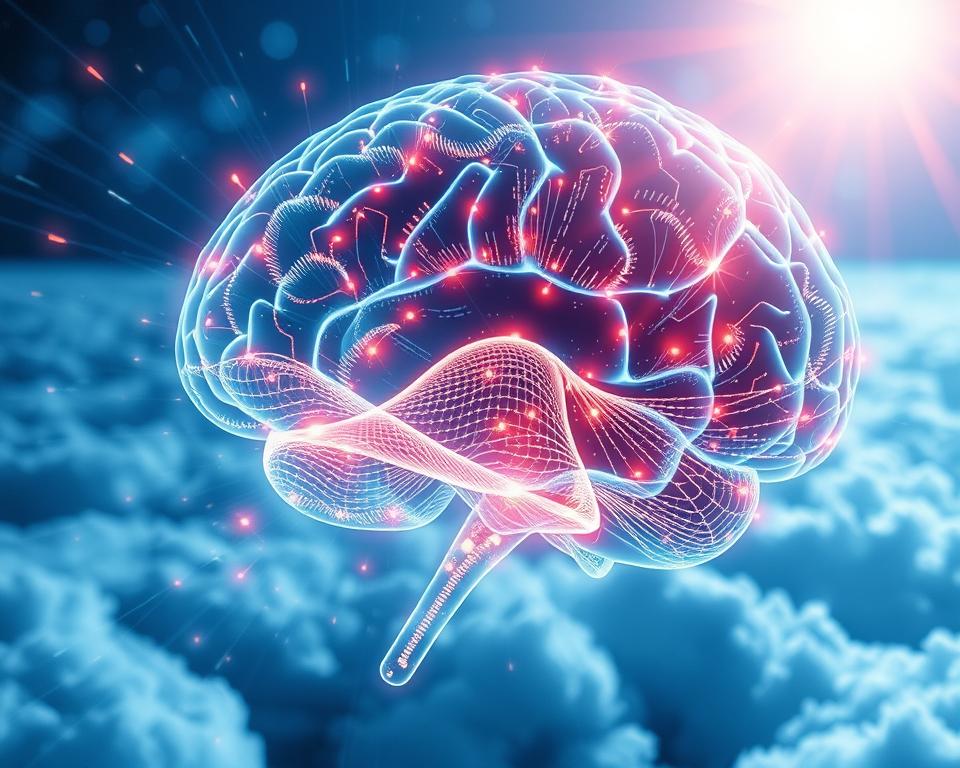
Estimated capacity: petabytes and one zettabyte of activity
A popular estimate places the capacity at around 2.5 million GB (2.5 PB)That equates to millions of hours of TV-like content.
However, recording all brain activity would be on another level: some estimates suggest a zettabyte.
The short-term Achilles' heel
Working memory handles approximately 7 items for ~20 seconds if you don't use strategies.
He chunking (chopping) transforms a lot of data into a few useful blocks and allows you to expand that limit.
Sleep and consolidate what you've learned
Sleep "records" what you studied. A good night's rest improves retention and prepares you to learn the next day.
Movement, BDNF, and retention with age
Exercise increases BDNF, promotes synaptic plasticity, and improves learning. Its effects increase with age.
- Plan short reviews before going to sleep.
- Use chunking for numbers or long lists.
- It includes short walks to oxygenate the brain.
“Having plenty of space isn’t enough: encoding and reviewing make what’s saved last.”
If you ever experience writer's block or episodes that seem amnesiaReview sleep, stress, and information overload. For more information, see [link to relevant section]. This guide.
Conclusion
You have gained clarity Regarding how you encode, store, and retrieve: the hippocampus and synaptic networks are the foundation, and context or emotion modulates each step.
You recognize phenomena that alter memories—false memories, the Mandela Effect, cryptomnesia—and you know how to protect yourself with simple records and verification.
You have practical tools: self-assessmentSpaced repetition, interleaving, and the strategic use of technology to tame the forgetting curve.
Remember to sleep to consolidate and move to increase BDNF. Use chunking and meaningful organization to take advantage of short-term limits.
Your plan Practical: short sessions, spaced-out reviews, regular nights of sleep, and small exercise routines. That way, what you learn stays with you and doesn't fade away in a few hours.