Advertisements
The memory palace It is an ancient method that originated in classical Greece and is attributed to Simonides of Ceos. This form of memorization uses a place known for organizing information and turning it into vivid images.
When creating a mind palace, you walk through a familiar building or path and assign each concept to a fixed point. That display It facilitates learning and long-term retention.
With simple steps and daily practice, you'll improve your ability to remember routes, lists, and complex ideas. The method of loci combines creation, association, and imagery to transform information into accessible memories.
Introduction to the technical street memory
Marco García Baturan He developed a practical adaptation in Madrid of method of loci to store routes and urban data in your mind.
This technical street report converts a city in a permanent mind map. The system organizes the information by fixed points and connects them with clear images.
To apply the method, it is essential to create categoriesFor example, shops, squares, and transport can be separate groups.
A brief study It shows that daily practice improves route learning and memorization. Over time, the use The system makes data recovery fast and reliable.
Key benefits:
- Organizes the information geographically in an orderly manner.
- Transform spatial memory into a large storage capacity.
- It allows you to mentally navigate through neighborhoods and remember precise details.
The historical origin of the method of loci
The history of the memory palace It begins in Ancient Greece, where rhetoricians and poets sought practical ways to condense long speeches.
Foundations in Ancient Greece
Simonides of Ceos is the central figure. He used visual imagery to remember verses and names. That early use established the principle: assigning each word to a place fixed facilitates recovery.
Evolution of the concept
In 55 BC, Cicero documented the method of loci in De Oratore. There he described how orators organized sections and revisited ideas in spatial order.
The method It survived because it converts the information in vivid scenes within mental palaces. Throughout the centuries the techniques varied, but the basis remains the same: using images and an order of places.
- Simonides applied visualization to complex speeches.
- Cicero documented its practical use for orators.
- The classic example is dividing a speech into points linked to points in the palace.
The neuroscience behind spatial memory
Mental navigation relies on neural circuits that translate space into memory. Understanding them helps in applying the method of loci more effectively.
The role of the hippocampus in navigation
The hippocampus, in the temporal lobe, is key to forming new memory and guide the body and mind. That's where the so-called cells operate. place, discovered as an internal GPS.
In 2014, that discovery was recognized with the Nobel Prize in Medicine. Various studies on place cells They show how these neurons encode positions and help to learning space.
- The hippocampus processes information spatial and records details clear views of the environment.
- He use The method of loci intensely activates these networks and improves the memorization.
- Understanding these basics makes it easier to apply techniques to study complex data.
“Place cells act as an internal system that translates places into memory signals.”
Understanding how the brain works allows us to design mental pathways that optimize information retention. information and the rapid recovery of memory.
Mental preparation to build your palace
Choose an everyday place And visualize it in detail before filling it with information. Choose a house or building that you know inside and out.
Take a mental tour of the rooms. Observe the doors, windows, and objects that stand out because of their shape or color.
Assign stations: use furniture or decorations as points where concepts can be placed. Exaggerated or absurd images make recall easier.
Plan a logical route. Each step should follow a natural path within the palace so that the association between object and idea is fluid.
- Choose a well-known house.
- Explore the rooms in order.
- Brand eye-catching objects like stations.
- Create striking images for each concept.
With daily practice, that memory palace will become a reliable map for quickly storing and retrieving information.
How to apply the technique in urban routes
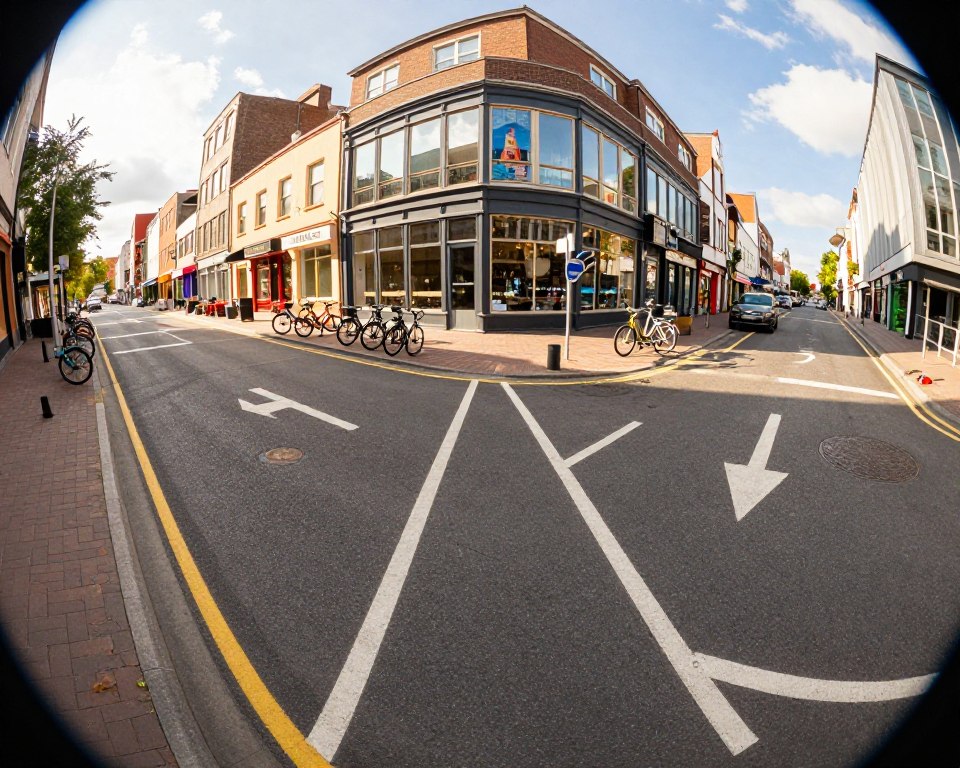
Turn your usual commute into a living map where every corner holds an idea. This approach shifts the memory palace From the house to the city. This way you can stay information in places you already know and retrieve data quickly.
Selection of family routes
Choose a short, repeatable route: your commute to work, to a café, or to the park. In the Madrid experiment, the following routes were used: 9 stations to save ideas from Martin Luther King's speech.
Limit the route to 7–12 points to facilitate order and recovery.
Station visualization
Assign each station a striking object and an absurd image. display transforms abstract words into easy-to-remember scenes.
- Brand each step with a clear objective.
- Associate a word or rhyme with each point.
- Repeat the process until the order is automatic.
Strategies for memorizing abstract names
A simple rhyme can turn a forgettable place name into a memorable scene.
Replace complex words with clear images. This transformation makes it easier. memorization and reduces the effort of retaining each word.
A good one example It's Saint Honofre: imagine a giant waffle wearing a toga and a halo. The image is absurd and stands out within your memory palace.
A small study shows that visual associations accelerate recovery of informationCreate direct and repeatable links in your mental pathway.
- It turns names into exaggerated everyday objects.
- Make the association Make it funny or strange so that it stands out.
- Integrate each new word into a station of the palace and review it frequently.
By applying this technique, the memory It processes less abstraction and more concrete images. Thus, information It ceases to be cold and becomes easy to recover.
Integrating mental boxes into your routes
Transforming your daily route into a chain of mental lockers helps organize ideas quickly. Each building or house can function as a small storage area for... information accessible.
Select visible objects: a door, a mailbox, or a tree. Assign each one a image that represents a key concept.
A practical example
Imagine a front door where you place a silly image that symbolizes your subject of study. As you pass by that point in your mind, you retrieve everything associated with it.
- Assign a number to each station to maintain order.
- Use strong and exaggerated images for each step.
- Repeat the mental process to solidify the association.
This technique of memorization It's very useful in the city. Turning facades and buildings into lockers makes it easier to remember lists, numbers, and long passages.
If you want to delve deeper into practical methods, consult an article on Mnemopolis to see applied examples.
Best practices for effective learning
To achieve efficient learning, it is advisable to turn each room into a point with clear meaning. Choose a house or place that you know and details doors, furniture and objects so that they are easy to recall.
Use shocking and absurd images. An exaggerated scene fixes the information in the memory and makes it easy to retrieve each idea later.
Organize concepts into categoriesFor example, the teacher who taught accentuation placed acute words in the kitchen and proparoxytone words in the living room.
- Each room functions like a station with a clear order.
- Associate a image by category to reduce the load of brain.
- Repeat the route in short, frequent sessions.
He use constant of this method It transforms studying into a creative activity. Little by little, the retrieval of ideas and words will become faster and more natural.
"Practice turns the palace into a reliable tool for storing and retrieving information."
Conclusion
The memory palace It offers a clear and practical way to organize what you want to remember.
This palace It transforms the studio into an active experience. With absurd images and short walks, the learning It becomes faster and less frustrating.
A good one example It involves using nine stations along a familiar route to store ideas, names, or rules. Daily practice reinforces each point and makes recall easy.
Start todayBuild your own palace and repeat short routes until the system works naturally.