Anúncios
Urban mobility is the movement of people and goods through a city by public or private transport. It shapes how residents reach work, services, shops, and other daily needs. As UN-Habitat noted in a 2013 report, access to activities and essential resources is a key part of city life.
Yet getting around can take time. In major Spanish cities, weekday trips average about 70 to 100 minutes, according to Ferrovial. That daily burden makes better routes, reliable transit, and connected travel systems matter to people and local businesses alike.
The Urban Mobility Index offers a useful snapshot. It assessed 84 large cities on a 100-point scale and found an average score of 43.9. Hong Kong ranked first at 58.2, showing that even leading cities have room to improve. Smarter, more sustainable travel can support quality of life today and help shape a better future.
Key Takeaways
- City travel moves people and goods through public and private transport.
- Daily trips connect residents with jobs, services, and products.
- The index covered 84 cities and reported an average score of 43.9.
- Hong Kong led with 58.2 points, leaving room for progress.
- Weekday travel in major Spanish cities often takes 70 to 100 minutes.
How movilidad urbana Is Changing City Travel
Getting across a city involves more than traffic and vehicles. Mobility is about how people reach work, shops, services, and friends. A 2013 UN-Habitat report on sustainable transport puts access to daily needs at the heart of planning. That goal also guides investments in livable cities.
Mobility Goes Beyond Transportation and Traffic
Walking, cycling, scooters, and skates all support short trips without a motor. These choices can help people cover the first or last stretch of a journey. Together, they make city travel more flexible and can save time on busy days.
How Walking, Cycling, Transit, and Private Vehicles Fit Together
Buses often handle shorter routes and connect riders with faster service. Metro lines can carry many passengers below street level, away from road traffic and poor weather. Rail also links central areas with growing suburbs, where expansion has increased travel needs.
Each mode works best as part of a connected system. Clear routes and useful links between services help people choose the option that fits their trip and local conditions.
Practical Solutions for Easier, Safer Commutes
Better commutes start with plans that match local needs. Cities can connect useful services, reduce car dependence, and make daily travel safer for more people.
Stronger Public Transit and Connected Mobility Apps
Reliable public transit helps riders link neighborhood bus routes with faster services. Better connections can cut wait times and make daily trips simpler.
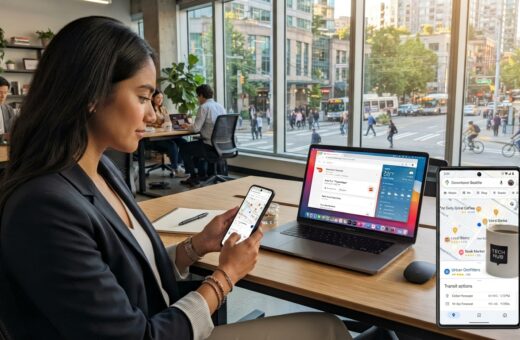
Mobility apps can show routes, arrival times, and service updates. These technologies help riders compare options and plan a smooth journey.
Smarter Traffic Management and Electric Vehicles
Traffic-management platforms help city teams respond to road conditions and manage traffic flow. A practical plan can follow four steps:
- Assess current travel conditions.
- Set objectives and choose measures.
- Track results with clear indicators.
Electric, hybrid, connected, and autonomous vehicles offer new options, but they are not a full solution. Lighter bus materials, smaller engines, and hybrid motors can also improve energy use.
Streets Designed Around Access and Proximity
Compact neighborhoods place daily needs closer to homes. Safer sidewalks and pedestrian-friendly public spaces support short trips and reduce pressure on roads. Good street design makes access a priority, not an afterthought.
How Sustainable Mobility Can Improve City Life
Cleaner travel can benefit residents, local businesses, and the environment at the same time. The goal is not just to move faster. It is to make daily trips useful, fair, and less harmful.
Less Pollution, More Efficient Trips, and Better Access
The United Nations World Commission on Environment and Development formalized sustainability in 1987. In 1992, society, economic progress, and environmental protection became its three core pillars. Together, they link cleaner transport with quality of life and long-term development.
Cutting emissions and reducing reliance on private cars can help improve air quality. Yet speed alone is not enough. People also need fair access to jobs, services, shops, and other daily needs. Walking, cycling, and public transit can support that access while easing traffic pressure.
City scores and commute times show why this work matters. The Urban Mobility Index gave 84 large cities an average score of 43.9 out of 100. In major Spanish cities, weekday travel often takes 70 to 100 minutes. Better choices can make each trip count.
| Evidence | Finding | Why it matters |
|---|---|---|
| Sustainability milestones | Formalized in 1987; three pillars set out in 1992 | Links society, the economy, and environmental care |
| Urban Mobility Index | 43.9 average across 84 cities | Shows room to improve city travel |
| Weekday travel in major Spanish cities | About 70 to 100 minutes | Highlights the value of efficient, accessible trips |
Conclusion
At its best, movilidad urbana helps people reach destinations, services, and daily activities. This access-first goal, highlighted by UN-Habitat in 2013, gives planners a clear test: can people get where they need to go?
Strong plans link public transportation, street design, and travel technology. They assess conditions, set goals, choose measures, and track results. Walking, cycling, buses, metro, and rail each serve different needs, so connected options matter. No single form of transportation fits every trip.
The Urban Mobility Index offers a useful reality check. Hong Kong led with 58.2 out of 100—not a perfect score. In major Spanish cities, weekday trips still take about 70 to 100 minutes. Integrated transportation improvements can make everyday journeys easier, safer, and more reliable. Coordinated transportation choices can help cities improve access over time.
FAQ
How can cities make daily trips easier?
Reliable public transit, safe streets, and clear travel information help people reach work, school, and services with less stress and wasted time.
Why is city travel about more than traffic?
A strong transportation system also supports accessibility, public health, and quality of life. It gives people practical ways to get where they need to go.
How do walking, cycling, transit, and cars work together?
Cities can connect these travel modes with sidewalks, protected bike lanes, transit stops, and convenient transfer points. People can then choose the option that fits each trip.
How can transit apps improve a commute?
Connected apps can show schedules, service updates, route options, and payment details. This information helps riders plan trips and manage delays.
Can technology reduce traffic and pollution?
Smart traffic signals can respond to road conditions and help keep vehicles moving. Electric vehicles can also reduce tailpipe pollution, especially when clean energy powers them.
What does access to nearby services have to do with travel?
When shops, schools, and health care are close to homes, people can make shorter trips. Good infrastructure and thoughtful development make these places easier to reach.
How can sustainable transportation improve daily life?
Efficient systems can cut travel time, ease congestion, and support cleaner air. More reliable options can also help people reach jobs and services.