Advertisements
How much of what you believe about a place comes from legends, and how much is explained today with data?
I invite you to separate poetry and proof So you can plan your trip better. Here you'll see how history and mystery intertwine with scientific explanations and archaeological discoveries.
We'll tour sites around the world that inspired stories: from optical phenomena like the fata morgana to muon scans of pyramids. I'll tell you what traditions remain and what evidence supports each story.
My goal is for you to travel informed and respectful. I'll give you practical advice on when to go, how to get there, and what rules to follow to protect ecosystems and cultural heritage.
Query data, compare sources and keep the magic: Understanding the truth doesn't take away the charm of the journey; it helps you experience it with more meaning and responsibility.
Introduction: Destination myths that shape how you travel today
Destination myths act like magnets that direct your steps towards a city, a mountain or a beach and determine which places you put on your travel list.
Before mass tourismMany stories emerged to explain the inexplicable: from castles and fairies in Scotland to the Prague Astronomical Clock or the legends surrounding Machu Picchu. Today, these narratives coexist with science, archaeology, and conservation practices.
This article will help you distinguish tradition from evidence. Get information from reliable sources and consult local guides before departure day to understand the rituals, rules, and boundaries of each location.
- Bring local cash, book tickets in advance, and check tides and weather.
- Respect the signs: Many tourist practices damage fragile spaces if you don't follow the rules.
- Plan in parts: historical context, logistics, sustainability, and realistic expectations.
Maintain curiosity with a critical spirit: enjoy the fascination without falling into misinformation. To explore how legend and proof intertwine in other cultures, you can read comparative accounts like the section on Chinese legends.
Between islands, coast and sea: myths that are born from the waters and their truths
Stories that originate by the sea often combine natural phenomena with stories that persist on ancient maps.
Saint Borondón and the Fata Morgana
Sightings of Saint Borondón date back to the Middle Ages and appear on classical maps. Today, the most plausible explanation is that Fata Morgana, an optical mirage over the waters near the Canary Islands.
Look for viewpoints on the Canary Islands' west coast on clear days, but remember: the mirage isn't constant.
Scylla and Charybdis: streams, not monsters
In the Strait of Messina, between Calabria and Sicily, the rocks and whirlpools gave rise to legends about the monster. Modern navigation reduces risks, but check sea conditions and ferry schedules before setting sail.
Tanah Lot and Vaadhoo: Practices and Ideal Times
Tanah Lot (a temple dating from 1537) is located approximately 100 m from the coast. Visit at low tide and dusk; respect sacred areas and local decorum.
In Vaadhoo (Maldives), phytoplankton bioluminescence is most prevalent between July and November. The best visibility is on moonless nights with calm seas; avoid bright lights and avoid disturbing the water.
Bermuda Triangle: Facts vs. Legend
The area between Miami, Bermuda, and Puerto Rico has more than 50 lost ships and 20 lost planes. However, studies by Lloyd's and the Coast Guard show it is no more dangerous than other heavily trafficked routes.
- Advice: Check the forecast, choose certified operators, and respect local signs and beliefs.
Cities, castles and rivers: when history merges with legend
In many cities, history is mixed with stories that explain places and customs.
Scotland and Ireland They preserve oral heritage: communities speak of fairies and White Ladies; on Knockma Hill, near Galway, you'll see the groove associated with the kingdom of Finvarra. Respect trails and private estates when climbing the hill.
Prague and its aura
The 15th-century astronomical clock is first and foremost a piece of engineering and art. Enjoy the stories without losing sight of the history technique. Ask at the municipal archives or hire a guide who will compare modern restorations with originals.
Romania: Vlad and Bran
Distinguish the historical Vlad from the literary vampire. Bran Castle near Brasov offers valuable tourist exposure, but avoids referring to the "monster" as the sole explanation.
- Tips: visit with local guides who value the cultural context.
- Look for less crowded routes along the river or in historic neighborhoods for a more authentic experience.
- If it's your first time, opt for audio guides and bibliographies recommended by museums.
To delve deeper into Scottish stories and heritage, check out castle guides like haunted castles of Scotland.
Mountains, caves and forests: mystery routes on dry land
In the heights and in the darkness of caves and forests, the land It preserves signs that tell both natural processes and ancient stories.
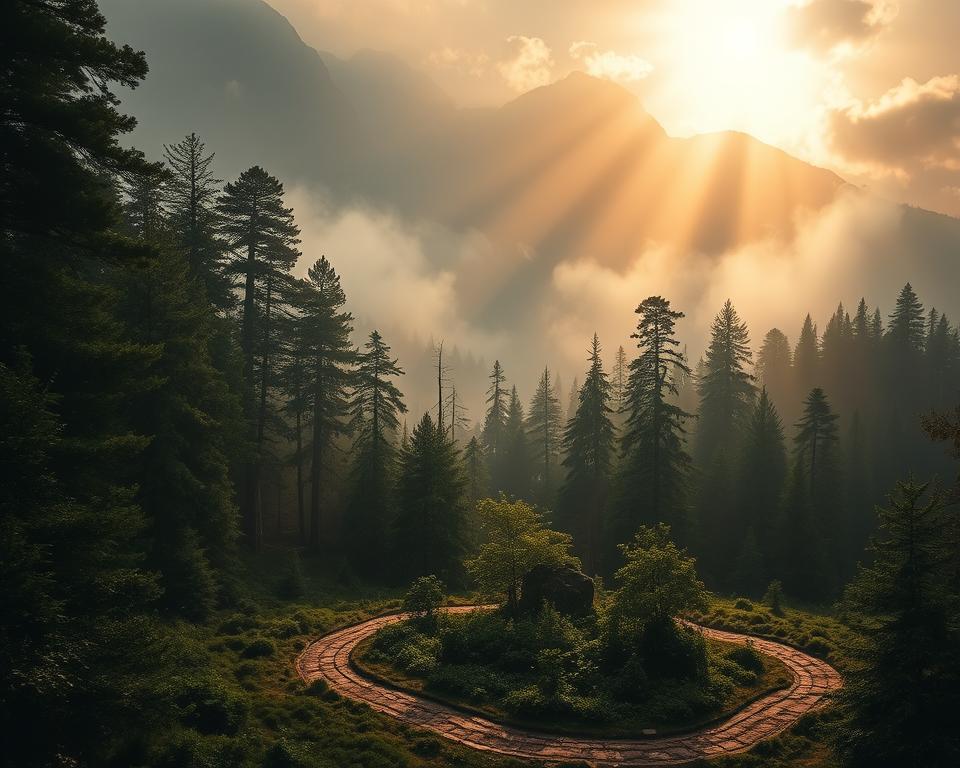
Cave of the Wind (Tenerife). With over 17 km of volcanic tubes and approximately 27,000 years of formation from Pico Viejo eruptions, it is a site of significant archaeological and Guanche significance. Make a reservation in advance and wear appropriate footwear: the passageways are fragile and restricted.
Mount Circeo (Aeaea). From the sea, it looks like an island; this optical effect has been linked to the Odyssey. Look for marked viewpoints and avoid off-roading: erosion and flora are protected.
Gozo and Calypso's Cave. It offers views of Ramla l-Ħamra. Check the entrances: they may be closed for security reasons. Avoid leaving litter and respect the residents; Ulysses's stories inspire, not exempt from respect.
Aokigahara (Japan). The forest at the foot of Mount Fuji boasts dense trees and a yūrei tradition. Prioritize official trails, respect helpful signs, and refrain from sharing sensitive images. If you're looking for local stories, hire guides who also provide information about mental health resources.
- Advice: In all these places, reduce your impact by following trails, quotas, and local regulations.
Archaeology and civilizations: myths contrasted with discoveries
Let's separate legend from evidence at some of the world's great archaeological sites. Here, you'll find current and practical explanations for visiting without damaging the heritage.
Machu Picchu: lineups and debates
Machu Picchu is located at 2,430 meters above sea level and was rediscovered in 1911 by Hiram Bingham, following local advice. Its large stones and the Temple of the Sun show solar alignments that fuel theories.
Advice: Ask for permission in advance, respect quotas, and follow the park rangers' instructions. The history of its function is still debated: sanctuary, royal retreat, or observatory.
Great Zimbabwe: Walls and Trade
The mortarless walls reach 11 m and are ~250 m in circumference. Excavations reveal Chinese ceramics and Indian glass beads; they provide evidence of regional trade networks.
Reject simplistic explanations: values Shona engineering and requests official guides to place this site in its real context.
Great Pyramid: muons and new data
Projects like ScanPyramids use muons to "see" inside without touching the structure. They detected a corridor about 9 m long; theories about its function vary from structural to ritual.
Don't assume that discoveries involve visitable chambers; appreciate the scientific method and the protection of thousands of years of history.
Cenotes of Yucatán: Xibalbá and conservation
The cenotes are linked to the traditions of Xibalbá and boast unique biodiversity. Visit during the dry season (November–April) and use the showers before entering.
Good practices: Avoid chemical blockers, hire operators who manage waste, and respect capacity limits to protect the aquifer.
“Myths inspire; research reconstructs history with evidence and care.”
- Respect trails and structures.
- Hire official guides and sustainable operators.
- Avoid speculation and value active conservation.
Conclusion
End your trip knowing that fascination with a place can coexist with respect and responsible curiosity.
Always look for local sources and official guides to contrast legends with facts. This way, you can enjoy the story without damaging the site.
When visiting a city, island, or river, plan for tides, weather, and local regulations. Avoid crowded routes and reduce your footprint as a tourist.
Remember: water, light, or moon phenomena are not guaranteed. Plan ahead with flexible timing, patience, and realistic expectations.
Leave every place better than you found it: ask, listen, and respect so that next time others can feel the same fascination.