
Advertisements
Traveling with peace of mind starts with simple steps. Choose hard-sided suitcases (polycarbonate or aluminum) to avoid damage during transit. Don't check irreplaceable items: your passport, money, and medication should go with you.
Use TSA locks and colored zip ties; they leave evidence and facilitate inspections without breaking closures. Photograph numbered seals before handing over the bag.
Conceal a tracker inside the lining, such as the UGREEN FineTrack Slim 1.7 mm, and sync it with the airline's app. Check in early: 90–120 minutes for international flights; for connecting flights, aim for at least 90 minutes.
If your bag hasn't arrived, go to the counter in 20–30 minutes, request a final scan, and ask for the WorldTracer ID. Submit a detailed Property Irregularity Report (PIR); after 21 days, it's considered lost and the Montreal Convention applies.
This practical idea It helps you set up a simple system: a combination of visible hardware, internal technology, and clear habits to minimize losses and act quickly if something goes wrong.
Your travel idea, your safety plan: what you're going to protect and why
Your idea It should be practical: define which items you never check in and why. Mark key documents as “always with me”: passport, ID, money, and medication.
Build a simple plan Make sure you know what goes in your carry-on and what can be checked. Distribute cash and cards between your wallet, money belt, and a separate pocket. That way, you won't lose everything in a single theft or loss.
Identify the most exposed points: check-in, security checkpoints, and baggage carousels. Decide which gesture to use at each and take photos before closing your suitcases: seals, cable ties, and the inside.
- Choose whether you use a tracker and which app you will use for two-factor authentication.
- Keep digital and physical copies in separate locations.
- If your bag is missing, go to the counter in 20–30 minutes and request the final scan and WorldTracer ID to open a PIR.
For connections, prioritize direct flights; if you have a connection, allow at least 90 minutes.
Understand the deadlines and the necessary documentation for claims. This way you protect what's essential and reduce friction if something goes wrong.
Choose the right suitcase before you leave
A well-designed suitcase It offers you real protection and fewer headaches in transit.
Hard case vs. soft case: Soft-sided suitcases can be cut in seconds. Opt for polycarbonate or aluminum for a sturdy surface that resists cuts and impacts.
Internal compartments: Look for hidden shelves and pockets that conceal the contents between layers. This makes quick access difficult and protects valuables inside the lining.
- Material: polycarbonate or aluminum for real deterrence.
- Inside: Cubes and dividers for modularity and review without exposing everything.
- Discretion: Sober colors and common finishes attract less attention.
- Strategy: She keeps valuables in a simple suitcase and leaves clothes in the designer one.
Take photos of the exterior before you leave; they are useful for damage claims.
Check zippers, corner protectors, and TSA lock compatibility. Four smooth wheels improve maneuverability and allow you to maintain physical contact with the suitcase.
Padlocks, cable ties and seals: visible barriers that deter
The first line of defense is visual: A clear and coherent closure reduces attempts and facilitates evidence if someone tampers with your suitcase.
TSA locks in the United States
Use TSA-approved locks so that, during inspections, authorities can open them without cutting. This prevents damaged locks and protects your contents.
Attach brightly colored zip ties and numbered seals to the main zippers and side pockets. Take a photo of the code before checking in; this will provide clear evidence if the item arrives broken.
Cable seals and combinations
Prefer approved combination metal cable seals or cable ties: they offer more strength without impeding authorized access.
- Combines TSA lock + visible cable tie for deterrence and evidence control.
- Design a sealing plan: main flange crossing the sliders and another on the sides; do not obstruct the handle.
- Carry spare cable ties in your coat pocket or carry-on and practice opening/closing them at home.
Photograph the final closing before invoicing; that image is often key in claims.
safe luggage packing habits
Packing with intention reduces risks: Define what should never go in the hold and how to distribute valuables within your carry-on.
Don't send away irreplaceable items: passport, ID, money, and medication
Keep essentials in the cabin: passport, medication, critical devices, and a change of clothes. Keep digital copies and a separate physical copy of the original.
Smart layout: wallet, money belt, and separate pocket
Distribute your cash and cards: some in your wallet, some in a money belt, and some in a hidden pocket. That way you won't lose everything in a single robbery.
- Use packing cubes to open only what's necessary on controls and protect valuable items.
- Place Slim trackers and keys in inconspicuous internal pockets.
- Write down serial numbers and take photos of your devices before you leave.
- Pack a mini toiletry bag and cabin chargers in case your suitcase is delayed 24–72 hours.
- Weigh your suitcase before leaving to avoid rushed repacking that creates risks.
A simple idea: distribute and document. This reduces losses, speeds up claims, and allows you to travel with greater peace of mind.
Technology on your side: airline trackers and apps
The combination of an internal locator and the airline's app reduces uncertainty.
UGREEN FineTrack Slim 1.7 mm It's a practical example: it allows you to locate your suitcase and its slim version fits in a wallet or passport cover without sticking out.
Place the device inside, never hanging it outside. Put it in the lining of the main compartment or under a layer of clothing so it's not visible or easily removable.
Use both tools
Activate alerts in the tracker app and airline notifications. This way you can compare statuses: loaded, transferred, and arrived.
If the airline's app says "loaded" but you don't see your suitcase, use the locator to find it inside the airport.
- Choose a tracker that's compatible with your ecosystem; avoid placing it in your outer pockets.
- Check the battery before flying and bring a spare if applicable.
- Associate the device with a clear name and save screenshots of each status.
A little tip: Place the locator at the top of the lining or between clothes to improve the signal and maintain discretion in your travel plans.
Time at the airport: when to check in to reduce risks
The moment you hand over your suitcase influences its security during transit.
Ideal window: For international flights, it's best to check in between 90 and 120 minutes before takeoff. For short and domestic routes, wait as close as possible to the boarding gate.
Checking in too early can leave your bag unattended for hours. Airlines typically process bags just a few hours before departure, increasing the risk of tampering or loss.
- Avoid handing over your bag outside the operational window: less time in transit reduces risks.
- Check that the label has the correct destination and that the adhesive is securely attached to the handle.
- Place cable ties or seals only after weighing and labeling so you don't have to open them if they are relabeled.
- Keep the receipt and take a clear photo of it; verbally confirm connections and final airport with the agent.
Do one last check of the tracker and apps before placing your suitcase on the loading belt.
If you want to read why many airlines ask you to arrive early, check out Why arrive on time?.
Labeling and rapid recognition
A simple idea It greatly improves the collection process and reduces confusion on the conveyor belt. Label your suitcase so it's easy to spot and difficult to mistake for another.
Straps, shiny labels, and contact information
Use a brightly colored leash or ID tag. To locate your suitcase from a distance and discourage it from being taken by mistake, add discreet patches or stickers to make it unmistakably yours without appearing expensive.
- Complete the label with your name, e-mail and phone number; omit home address to avoid revealing your absence.
- Place a second label inside in case the outer one comes off.
- Take photos of your suitcase and the airline's tag to attach them in case of loss.
- Check that the destination label does not cover your cable ties or seals.
Upon arrival, position yourself near the start of the conveyor belt and watch each turn; quick visual recognition is key.
Do not leave the area without double-checking. The tag with your name and destination. If you see a similar suitcase, confirm the tag number before taking it and keep your hand on the handle when removing it.
Constant surveillance at terminals
Maintain constant vigilance in public areas of the terminal to reduce theft attempts and confusion.
Group: Coordinate clear shifts so that no luggage is ever left unattended. Decide who watches over the luggage in 10-15 minute blocks if it's in the cafeteria or in lines.
Shifts and physical contact
If you're traveling alone, keep in touch: a hand or foot on the handle gives you immediate alert to any jerking.
When you sit down, loop the leash around your leg or foot. It's a simple trick that prevents silent snatching and works in waiting rooms and cafes.
- Avoid corridors and areas with fast traffic where "scooter snatch" occurs.
- Keep pockets closed and small items in sight in secure trays.
- Don't accept unsolicited help with your bags; it's usually a distraction.
- Mentally count your belongings (suitcase, backpack, coat) before and after the scanner.
If you notice any tampering, take photos immediately and find the nearest security personnel.
Extra: Activate proximity alerts on your tracker if it has that feature. It will warn you before the distance gets too large.
Fly direct when you can, take layovers when you can't.
Opt for direct connections whenever possible; This reduces points of failure and the number of hands handling your suitcase.
Prioritize direct flights To minimize transfers and the risk of loss. Each additional leg increases the possibility of errors between airlines.
If you must connect, leave at least 90 minutesThis margin allows for unhurried transfers and reduces the likelihood of your luggage not arriving on time.
- Avoid itineraries with multiple airlines and very tight layovers.
- Check if the label covers the final destination; if not, consider re-invoicing in advance.
- Use the airline app to confirm loading and transfers between sections.
- Check the distance between terminals and weather conditions that may delay flights.
“If your tracker indicates that your bag hasn't left the airport, inform them before boarding your connecting flight.”
Keep receipts and flight numbers. In case of a claim, this information speeds up the process and protects your trip.
Skip-the-line luggage collection
A quick and efficient collection process makes all the difference between carrying your suitcase and wasting time or suffering confusion. Get to the belt before it starts to spin and stay alert from the very beginning.
Arrive first and double-check before leaving
Disembark decisively and walk straight to the conveyor belt. Position yourself near the exit to be among the first to see the pieces go by.
Compare the color, brand, and personal markings before taking the receipt. Verify the receipt number against your boarding pass and the photo you took at check-in.
- Keep your phone ready and the tracker app open in case you need guidance.
- Avoid calls or purchases: paying attention to the tape prevents confusion and theft.
- If your bag is delayed, ask the staff for the correct carousel and flight status.
- If you notice any damage or broken seals, document it with photos and request a report immediately.
- If someone picks up a similar item, politely ask them to check the label before walking away.
“Checking twice is always better than regretting it later.”
If your suitcase doesn't appear: take action at the baggage counter
Don't waste time: If you don't see your bag within 20–30 minutes, go to the lost and found desk. Speak clearly and provide your flight details immediately.
Check the latest scan and request WorldTracer ID
Ask them to show you the last scan To find out if the part is at its origin or in transit, request the use of WorldTracer and note the tracking ID they provide.
Note down the direct contact information for the bags department and confirm how you will receive updates (SMS or email).
Submit the PIR immediately with a detailed description
Complete the PIR at the counter without delay. Many airlines require it to be presented within 24 hours for international flights.
- Describe color, brand, size, and distinctive features.
- It includes an approximate list of contents and photos of the suitcase and previous stamps.
- Attach screenshots of the tracker if they show a recent location.
- Confirm delivery address and times at your destination.
Keep a copy of the PIR and record every interaction; accurate information speeds up retrieval.
Monitoring, proof of purchase, and persistence
Act in an orderly fashion from the first minute. After submitting the PIR you will receive a case number and, in many systems, a WorldTracer IDWrite them down and put them in one place so you don't lose them.
Save the number, verify, and keep everything.
Centralize your case number and the WorldTracer ID in a note with dates and summaries of calls or emails.
- Check the status daily on the web or app and update contact and location.
- Keep copies of receipts and tickets for essential expenses related to the delay.
- Document captures from the tracker; these images often accelerate the process. follow-up.
- Maintain a cordial but firm tone in every contact; consistency increases priority.
Most delayed bags appear within 72 hours; if not, request escalation to the supervisor.
If 48–72 hours pass, request that the case be escalated and confirm that the delivery address is correct and that someone will be available to receive it. Don't wait: contact them yourself if you don't receive any updates.
Compensation, essential expenses and travel insurance
Before buying out of desperation, check what expenses the airline and your policy cover. This way you avoid unnecessary purchases and prepare useful evidence to make a claim.
What the airline usually covers: Underwear, toiletries, a change of clothes, and basic chargers for late arrivals. Keep all receipts; without them, the chance of a refund is low.
Key deadlines and limits
If your suitcase doesn't turn up, remember that after 21 days it's considered a total loss. In that case, you can file a claim under the [relevant law/register/etc.]. Montreal Convention, with limits equivalent to ~1.288 DEG, always with tests.
How your policy can help
Many plans cover delays of 6–12 hours. Open a claim with the provider as soon as you exceed that time and attach the PIR, case number, or World Traceritinerary and receipts.
- Gather receipts for hygiene products, clothing, and chargers.
- Include photos, inventory, and serial numbers if there is a permanent loss.
- Keep all communications in writing and in a single repository.
- Use the tracker as evidence if it shows a contradictory location.
Acting quickly and documenting every expense speeds up reimbursement and protects your right to compensation.
Hotel habits: safe routine inside and outside the room
Nothing beats a quick check when you enter your room. Check locks and windows before leaving your belongings.
Use the safe or a locker with your heavy-duty padlockKeep your passport and excess cash there. Only take what you need when you go out.
- Distributes money and cards: money belt, inner pocket and lightweight wallet.
- When you're in common areas, loop the backpack strap over your leg or chair.
- Do not leave bags in hallways or doors ajar during check-in or check-out.
- If someone requests access for maintenance, please confirm with reception before allowing entry.
In hostels, lock lockers with your own padlock and avoid leaving electronics exposed when not in use. Use hangers and organizers so that items are not visible when you open your suitcase.
Before going to sleep, keep a mini-EDC handy: phone, documents, and keys. That way you can get out quickly if needed.
Outside the hotel: minimalist daily carry-on without "everything in one place"
When you leave the hotelCarry only what you need. A minimalist EDC reduces risks and makes you more agile.
Documents, a card, limited cash, mobile phone, and keys That's usually enough. Leave the rest in the safe or in your room.
- Distribute cards and bills in two different places; don't concentrate everything in one wallet.
- Carry your wallet in your front zippered pocket. Avoid your back pocket, a favorite of pickpockets.
- Consider a money belt or a neck wallet if you're visiting crowded areas.
- Keep the backpack across your front and hold the strap with your arm in crowds.
When you sit down, loop one leg through the bag strap. That simple action prevents silent tugs.
Activate contactless payments and use offline maps to avoid looking lost. Don't display cameras or laptops; only take them out when using them.
“If something makes you uncomfortable, cross the street, go into a shop, or request a rideshare from a safe location.”
Final pre-flight checklist
Before you leave, take a few minutes for this quick review. This reduces errors and speeds up any claims if something goes wrong.
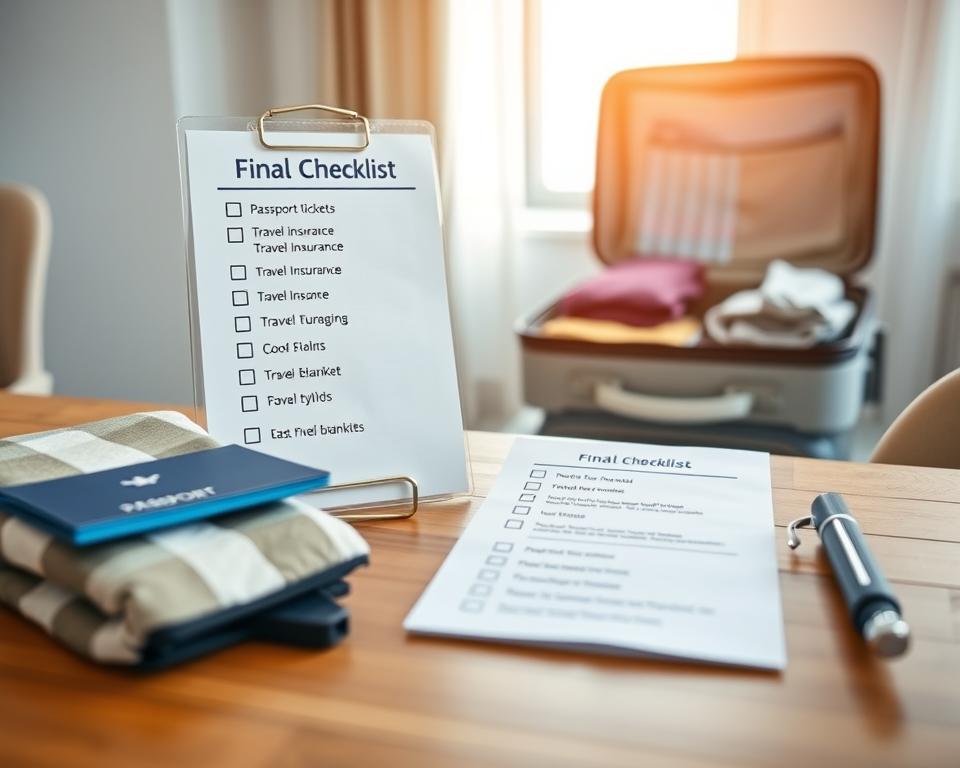
Firm labels, photos, and copies ready
- Check labels: Confirm that the airline label is properly attached and that the destination is correct; photograph the stub and the label.
- Document stamps: Take clear photos of cable ties and numbered seals before handing over the suitcase.
- Tracker and locks: Make sure the TSA lock is closed and the tracker is active with sufficient battery power.
- Digital backup: Email your packing list and approximate values; save copies of your passport, policy, and reservations in the cloud and on your mobile device.
- Carry-on ready: Confirm that you have the irreplaceable items and a complete change of clothes; weigh your suitcase and check airline limits.
If your bag doesn't appear, go to the counter in 20–30 minutes, ask for the final scan, the WorldTracer ID, and complete the PIR.
Conclusion
Protecting your suitcase is not paranoia: It's practical planning that reduces surprises and allows you to travel with control.
A suitable suitcase and a tracker (for example, UGREEN FineTrack) They give you traceability and more options if something goes wrong.
Act quickly if your part is missing: request the latest scan, apply for WorldTracer, and complete the PIR. With documentation and daily tracking, returns usually arrive within 72 hours; after 21 days, it's considered lost according to the regulations. Montreal Convention.
Stay calm, be persistent, and use technology and visible seals to minimize risks. With practice, these actions become routine and allow you to enjoy your trip more.