Advertisements
Can you imagine walking today through streets where trains float and parks generate energy? This guide shows you how those visions are already a reality.
Explore a city that integrates technology and sustainability Change the way you travel. You'll see clear examples: citywide Wi-Fi, electric buses, and skyscrapers that define the skyline.
We'll take you through cities of the world that function as a model of futureEach stop includes data useful for your day-to-day life as a visitor.
In the end you'll know what city Discover what to visit first and which experiences to prioritize on your route. You'll learn how urban life improves when innovation and sustainability go hand in hand.
Key findings
- You will identify cities with advanced infrastructure and concrete examples to visit.
- You will understand why sustainability drives urban innovation.
- You will use practical data to compare options and plan your trip.
- You will prioritize technological experiences that improve your life as a traveler.
- You'll find key areas to optimize your itinerary and make the most of what's essential.
Why these futuristic destinations capture your imagination today
You'll see that in many modern metropolises, the future is revealed in everyday details. The mixture of history And skyscrapers create a contrast that attracts and explains why the city You find it so fascinating.
In Asia, temples and towers coexist: Seoul leads in patents and Taipei shines as a technology hub. Singapore has implemented green regulations since 2008 and already has over 501,000 hectares of its surface area in green spaces, with Supertrees that produce energy and they collect water.
The technology Change your day: Wi-Fi in stations in Seoul, 1 Gbps in Hong Kong, and projects like Smart Dubai digitizing procedures. This improves the transport, reduces cars and optimizes life urban.
- Projects iconic combine design, clean energy and a grid data for the people.
- Digital governance transforms the city in a practical model that you can use today.
- The buildings Contemporary people engage in dialogue with history, creating a coherent and replicable development in the world.
Futuristic destinations in Asia that are redefining urban life
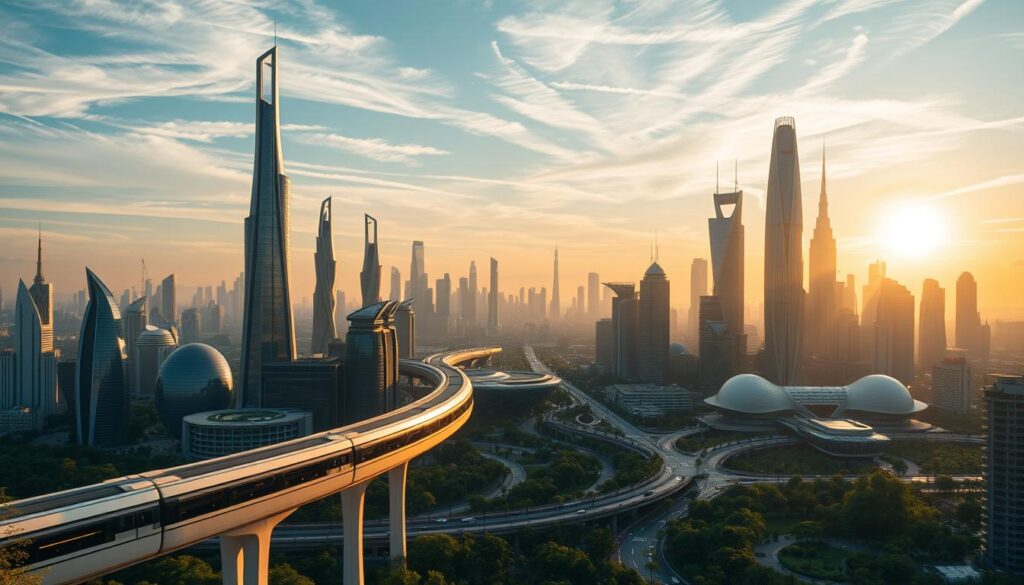
Asia brings together cities that are reinventing how you live, work, and move around every day.
Tokyo, Japan
The city moves you with precision: 13 subway lines and 286 stations. Akihabara, or “Electric Town”, is a district where culture and technology blend in shops and cafes.
Singapore
Gardens by the Bay and Marina Bay Sands showcase living sustainability. Over 501,000 sq ft of the land is green; Supertrees generate energy and capture water.
Seoul and Hong Kong
Seoul combines design and service: the DDP attracts 1.5 million visitors a year and Seoul Smart Cities offers Wi-Fi on trains.
Hong Kong scales vertically: 552+ buildings over 150m and multi-level systems with connectivity up to 1 Gbps.
Shanghai, Shenzhen, Osaka, Kuala Lumpur and Dubai
Shanghai is connected by a Maglev train speed exceeding 430 km/h and boasts a skyline of over 700 towers. Shenzhen, with Huawei and Tencent, uses fleets of electric buses for its millions of residents.
Osaka tests smart streetlights; Kuala Lumpur unites culture and government; Dubai adds Burj Khalifa and one of the world's largest solar parks.
- Example: fewer cars, more service network.
- ResultCities that blend technology and sustainability to improve people's lives.
Urban innovation in the United States: everyday technology that transforms your day
North American cities are turning technology into everyday routine. During your visit you will notice services that work effortlessly: from the airport to the hotel, connectivity accompanies you.
Seattle, Washington. Microsoft, Amazon, and Starbucks coexist here; the city attracted more than 50,000 internet professionals in the 1990s. You'll experience 24/7 wireless and digital services that simplify everyday life.
San Francisco and Silicon Valley. You'll be close to Apple, Google, and Meta. Buses with touchscreens and Wi-Fi demonstrate how connected mobility improves your productivity on the go.
“Technology ceases to be a novelty and becomes a service that facilitates your daily decisions.”
- In Seattle you'll see examples of companies testing projects instantly.
- In San Francisco, hubs like Stanford Research Park connect government, academia, and the private sector.
- Both cities function as trendsetting centers that the rest of the world adopts.
If you want to delve deeper into the challenges of smart citiesYou will find useful context to understand how these advances are scaled.
Europe in smart mode: sustainability, data and design for connected inhabitants
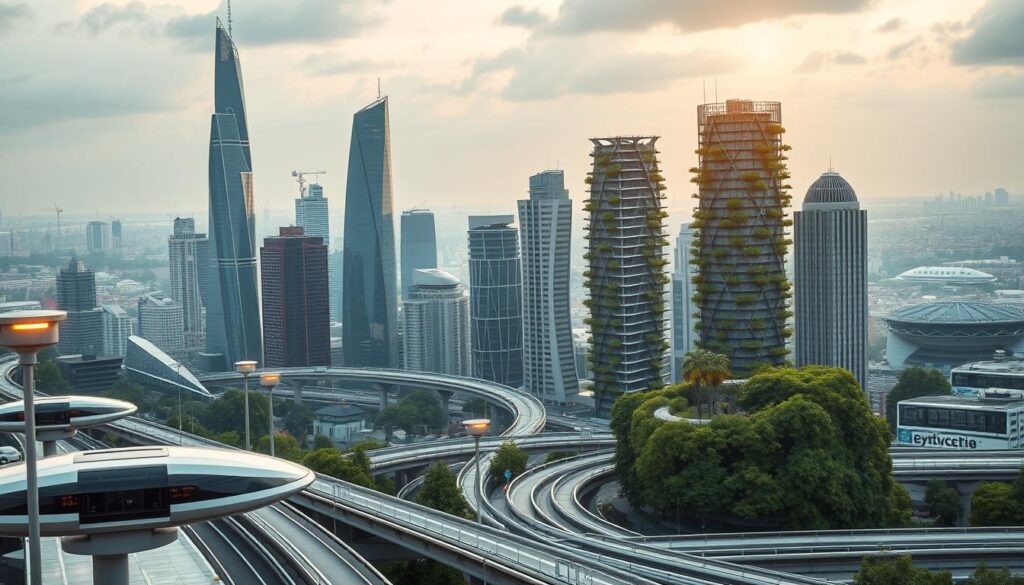
Europe shows how urban innovation can improve your daily life in streets that work better. Here you will find cities where the sustainability and the data is combined with good design to benefit the inhabitants.
Amsterdam
In Amsterdam, the Amsterdam Smart City program promotes real projects.
Walk down Climate Street and you'll notice the energy-efficient lighting and smart transportation that has reduced pollution.
London
Connected London is a public-private effort to bring 5G and fiber optics to city scale.
This improves connectivity for visitors and residents, and accelerates digital services in centers and neighborhoods.
Barcelona
Barcelona uses LED sensors for traffic, air quality, pedestrians and noise.
You'll see underground suction containers and a bike-sharing system that transformed the city center.
- Example: projects you can see and use, not just promises.
- Local governments are coordinating with companies and academic centers to scale solutions in a few years.
- The history of leadership (e.g. Smart City Expo, 2011) positions Europe as a replicable model.
"The future of Europe lies in cities that put people and data at the center."
India and emerging South Asia: talent, data and accelerated growth
Bangalore shows how local talent can turn a city into a technology capital.
Bangalore: Bagmane Tech Park and the 35% of Indian IT professionals
In Bangalore, you breathe talent. Parks like Bagmane Tech Park They bring together software R&D and attract startups and multinationals.
Around 35% of Indian IT professionals work here, a fact that drives the growth of products and services that you use every day.
You'll see innovation centers where companies and universities collaborate. Launch cycles are short: projects that in a few years They move from prototype to regional market.
- The city It combines training, investment, and ecosystems that retain millions of users.
- Well-connected neighborhoods facilitate meetings, co-working, and leisure without wasting time.
- Academia-business cooperation creates a pool of key professionals for the development.
“Bangalore exports talent and solutions to other Asian cities, strengthening technological value chains.”
Conclusion
As this trip comes to a closeYou know that every city combines technology, design, and green spaces to improve everyday life.
Visiting these cities around the world provides clear examples: Singapore as a garden city with over 501,000 green spaces, Tokyo with 13 subway lines, or Shanghai with its Maglev train traveling at 430 kilometers per hour. You'll see digital terrestrial television (DTP) and Wi-Fi in Seoul, skyscrapers in Hong Kong, and solar solutions in Dubai.
This handy map helps you plan your next trip. You'll find capital cities and tech hubs where people and residents enjoy services that are transforming their daily lives. The future is ready to be experienced and learned.
FAQ
What makes a city look like it's straight out of a movie?
A combination of iconic architecture, everyday technology, and advanced mobility systems. Think landmark skyscrapers, efficient transport networks, and public projects that integrate renewable energy and green spaces. All of this creates an urban experience that surprises and attracts millions of visitors and residents.
Why do these futuristic destinations capture your imagination today?
Because they showcase real solutions to urban challenges: emissions reduction, data management for mobility, and sustainability projects. Seeing how subways, electric buses, or smart districts work helps you imagine what life will be like in the future and which technologies can be exported to other cities.
What can I see in Tokyo related to advanced urban living?
In Tokyo, you'll find a subway network with over 13 lines, smart districts with sensors, and high-tech shopping centers like Akihabara (Electric Town). You'll also see integration between public transportation, real-time data, and quality-of-life improvement projects.
Why is Singapore an example of a green and technological city?
Singapore combines iconic landmarks like Gardens by the Bay and Marina Bay Sands with urban planning that prioritizes over 501,000 hectares of green space in certain districts. Its model integrates water management, energy efficiency, and an urban network that facilitates non-motorized and public transportation.
What distinguishes Seoul in urban innovation?
Seoul is promoting Seoul Smart Cities with open data platforms, modern architecture projects like the Dongdaemun Design Plaza (DDP), and a strong presence of technology companies developing solutions for mobility, energy, and municipal services.
How does verticality impact cities like Hong Kong?
High density and over 550 skyscrapers present both challenges and solutions: multi-level transportation, efficient urban logistics systems, and service planning. Verticality necessitates innovation in accessibility, energy, and public spaces to improve the lives of residents.
What technologies stand out in Shanghai and Shenzhen?
Shanghai is known for its 430 km/h Maglev train and a skyline dotted with hundreds of towers that symbolize investment and growth. Shenzhen is home to companies like Huawei and Tencent, and fleets of electric buses that demonstrate the transition to sustainable transportation and connected urban networks.
How do smart streetlights and sensors help in Osaka?
Smart streetlights integrate efficient lighting, cameras, and environmental sensors. These devices allow for monitoring air quality, optimizing energy consumption, and improving security, creating a more humane city that is more responsive to daily needs.
What role do landmarks like the Petronas Towers or the Burj Khalifa play?
Beyond their tourist value, these buildings act as economic and technological hubs. They generate infrastructure investment, catalyze urban projects around them, and often incorporate energy efficiency solutions and public space management practices.
What everyday innovations can you find in US cities like Seattle and San Francisco?
In Seattle, you'll find constant connectivity and services powered by companies like Microsoft and Amazon. In San Francisco, Silicon Valley's influence translates into transportation with interactive screens, widespread Wi-Fi, and apps that make your daily life easier.
How are European cities applying sustainability and data?
Cities like Amsterdam, London, and Barcelona use traffic and air quality sensors, efficient lighting, and fiber optic and 5G networks to optimize services. They also promote active and shared mobility to reduce emissions and improve the urban experience.
Why is Bangalore key in South Asia?
Bangalore is home to technology hubs like Bagmane Tech Park and a large portion of India's IT talent. This fosters the creation of data platforms, startups, and urban solutions that accelerate the region's development.
What role do companies and governments play in these projects?
Local governments define policies and finance infrastructure; private companies contribute technology, investment, and management. Public-private partnerships enable the scaling of transportation, energy, and housing projects with sustainable models and real-time data.
How do these projects affect the lives of the inhabitants?
They improve mobility, reduce travel times, and increase air quality and access to services. They also generate employment in the technology and construction sectors and promote more inclusive and resilient urban models in the face of population growth.
What indicators do cities use to measure success?
Common indicators include emissions reductions, public transport use, renewable energy coverage, kilometers of bike lanes, average commute time, and data on population well-being. These help to adjust long-term policies and projects.